

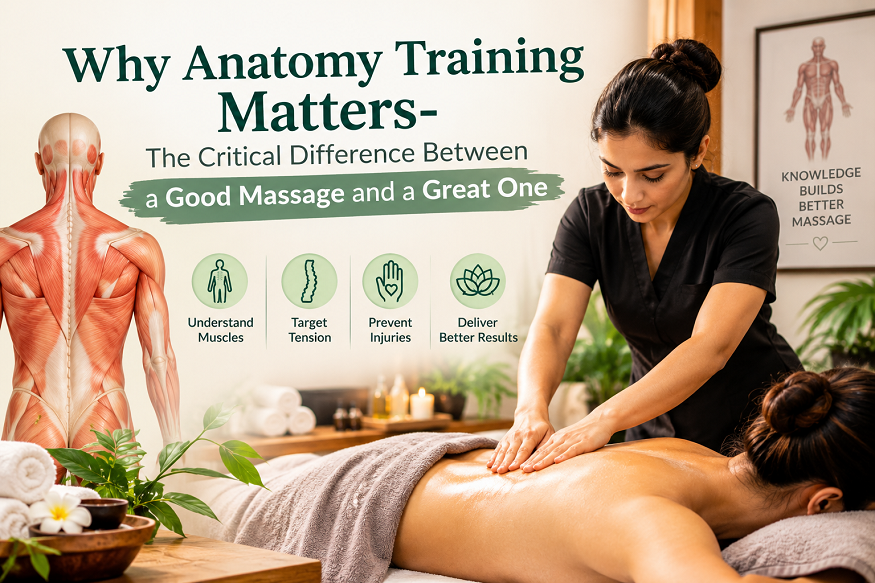
The Massage That Almost Worked
Let me start with a confession. A few years back I walked into a spa in Andheri west, tired, cranky, shoulders hiked up near my ears, and I came out feeling… fine. Just fine. Nothing awful happened. The oil smelled lovely, the music was soothing, and the therapist was sweet as anything. But my neck still ached the next morning, and honestly, I felt a little cheated. Now, here’s the thing: I couldn’t explain why. It took me ages to figure it out. The pressure was decent, the strokes were smooth, the room was spotless. So what was missing? Knowledge. Real, nerdy, textbook meets fingertips knowledge of what lies under the skin. That’s the gap I want to chew on today, because it’s much bigger than most people realise, and it changes everything about how you should choose someone to work on your body.
Good Hands Versus Informed Hands
Here’s what nobody tells you. Plenty of people have good hands. Warm palms, steady rhythm, a natural feel for comfort. That counts for something, and I’m not dismissing it. But comfort and correction aren’t the same animal. A therapist who understands anatomy doesn’t just rub where it hurts. She knows why it hurts and, more importantly, that the sore spot is often just the messenger. Think about a tight shoulder. Is the trouble in the shoulder at all? Maybe the chest muscles are pulling everything forward, or the upper back is overworking because the hips are locked up. Without that map in her head, a therapist is basically driving through a new city with no signboards. She’ll get somewhere, sure. Whether it’s where you needed to go is another question entirely, and one you’ll only answer the next day.
Read More: ADHD in Students: Why Smart Kids Underperform and What to Do About It
Four Words and a Whole Story
I’ve chatted with a few therapists over the years, including one who trained for months before she touched a single paying client, and her stories stuck with me. She told me that when someone books a session at a spa in Andheri west, or anywhere else for that matter, they usually say the same thing: my back hurts. That’s it. Four words. A trained therapist hears them and starts thinking about the deep muscles along the spine, the way the pelvis tilts, even how the person sits at a desk all day. Someone untrained hears “back” and presses on the back. See the difference? One is listening with knowledge, the other with good intentions alone. And good intentions, bless them, have never untangled a single stubborn knot in anybody’s body.
Muscles Don’t Work Alone
Let me take a little detour, because this part genuinely fascinated me when I first learned it. Muscles are layered, like sheets of fabric stitched over one another, and they’re wired into fascia, nerves, tendons, and blood vessels that all have opinions. Press too hard in the wrong spot and you can irritate a nerve instead of releasing a muscle. Skip a spot you should’ve worked and the tension simply relocates, like water finding a new crack. Ever noticed how a headache can vanish after someone works on your jaw and the back of your neck? That’s not magic. It’s several muscles having a quiet conversation across your skull. A therapist who knows these connections can follow the chain link by link. One who doesn’t is just guessing, and guessing with a living body is a risky hobby.
The Pressure Myth
Now, can we please retire the idea that deeper always means better? I used to believe it too. Somebody once dug an elbow into my shoulder blade so hard I saw colours, and I thanked her afterward like a fool. Hold on, let me think about why we do that. I guess pain feels like proof of work, like the harder it stings, the more gets fixed. But a muscle that’s being bullied tightens up to protect itself, which is the exact opposite of what you were after. Skilled therapists adjust depth by tissue, by layer, by how the body answers in real time. They know where bone sits close to the surface, where arteries run, where the skin is thin as paper. Great pressure is intelligent pressure. Sometimes it’s firm, sometimes barely there, and it’s always intentional.
Safety Is Part of the Craft
This bit isn’t glamorous, but it matters enormously. Bodies come with histories: old fractures, varicose veins, pregnancy, blood pressure troubles, surgery scars, slipped discs. A therapist without anatomical grounding might never notice a red flag, or worse, notice it and not understand what it means. Certain areas shouldn’t be pressed heavily. Some conditions need a medical opinion first. Knowing the difference isn’t fussy, it’s protective. I remember a friend whose calf was swollen and tender, and her therapist, to her credit, stopped immediately and suggested she get it checked. It turned out to be something that needed real attention. Would an untrained person have caught it? Honestly, I doubt it. That pause, that gut instinct, comes straight from understanding what healthy tissue feels like under the fingers.
Reading the Body Before Touching It
Great therapists start working before the oil even comes out. They watch you walk in. They notice which shoulder sits lower, how you shift your weight, whether you wince when you lower yourself onto the table. It’s a bit like a detective spotting small things nobody else bothers about. Then come the questions, gentle ones, about sleep, work, old injuries, the way you carry your bag. Then the hands begin, feeling for temperature, texture, tiny differences between left and right. All of that depends on a mental picture of how a healthy body should look and feel. If you’ve never studied the picture, how on earth would you spot what’s off? You wouldn’t. You’d follow a routine, one that works for everybody and therefore, in a strange way, for nobody.
Why Routines Fall Short
Routines are comforting for the people who give them. Same sequence, same strokes, same timing, client after client. I get it, efficiency matters when the day is long and the appointments are stacked like plates. But bodies aren’t factory products. A software engineer hunched over a laptop for ten hours needs something different from a new mother carrying a baby on one hip, who needs something different again from a runner with cranky hamstrings. Anatomy training hands a therapist the freedom to improvise. She can drop the script, switch techniques midway, spend twenty minutes on the neck and five on the legs if that’s what your body is begging for. Improvisation without knowledge is chaos. With knowledge, it turns into something closer to artistry, and you can feel the difference within minutes.
What the Learning Actually Looks Like
People imagine training as dusty lectures, and sure, there’s some of that. Names of bones, where muscles begin and end, the path nerves take through the limbs. But the best programmes get students touching, locating structures on real bodies, learning to feel the difference between a tendon and a tight band of muscle. It takes time. Months, sometimes years of practice before it feels natural, and plenty of awkward fumbling along the way. And then there’s the ongoing part, because a good therapist never really stops studying. She reads, she asks questions, she attends workshops, she corrects herself without fuss. That humility, I think, is the secret ingredient. Arrogance in this work is dangerous; curiosity is gold. Whenever I meet a therapist who says “I’m still learning,” I relax a little and sink deeper into the table.
How You Can Tell the Difference
So how does an ordinary person spot a well trained therapist? You don’t need to see a certificate, though asking about training isn’t rude at all. Notice the intake. Do they ask where it hurts and for how long? Do they check on pressure without being prompted? Do they explain what they found? Do they change approach when something isn’t working? And afterward, do you feel lighter, more mobile, like something actually shifted rather than merely softened? A pleasant massage feels nice while it lasts. A great one keeps working for days, quietly, the way a good conversation echoes after you’ve gone home and put the kettle on. Trust that difference. Your body keeps the receipts, and it never forgets who helped and who just went through the motions.
Where I Finally Felt It
I’ll be honest about the session that changed my mind. It was at Yuan Thai Spa, and I went in skeptical, mostly because of that earlier letdown. The therapist asked about my work, watched how I stood, and spotted a hip imbalance I’d never known about. She worked my glutes and lower back for a good while before going anywhere near my sore neck, and I thought, hmm, odd choice. By the end my neck felt looser than it had in years. I actually laughed out loud, a bit embarrassed. She just smiled and walked me through the chain of muscles involved, drawing little lines in the air. That’s when the penny truly dropped. It wasn’t luck or some fancy technique. It was understanding, simple and deep, put to work through patient hands.
Read More: HOW NAD+ LEVELS INFLUENCE AGING AND WHY INJECTION THERAPY IS GAINING ATTENTION
The Takeaway Over Coffee
So, back to where we began. A good massage soothes. A great one solves, or at the very least nudges you toward solving. The bridge between them is anatomy, the quiet study that turns kindness into real skill. Next time you book a session, anywhere at all, ask a question or two. Pay attention to how you’re listened to, not just how you’re touched. And if you’re someone who gives massages, or dreams of it, please don’t skip the books and the practice hours. Your clients can’t see your training, but they’ll feel it in every single stroke. Funny how the invisible stuff matters most, isn’t it? Anyway, that’s my two cents. Go treat your body well, and make sure whoever treats it truly knows what they’re doing.